Flevokust Port as forerunner
In the search for more sustainable use of scarce raw materials, circular working plays an increasingly important role. Soil is one of the most important material flows in the physical design of our living environment. The demand for soil is high, but the availability of high-quality raw materials is rapidly decreasing. The shortage of soil is a global problem. In the Netherlands, this is very noticeable: the high price and scarcity of land hinder housing construction and area development.
A circular approach to land flows can provide a solution here. Using and reusing soil in a smart and responsible way not only protects the environment, but also saves costs. Moreover, reuse can reduce CO2 emissions by keeping raw materials within the area. Flevokust Haven, the multimodal inland port with transhipment quay and business park north of Lelystad, is a good example of how circular work really works in practice.
Working circularly at Flevokust Port
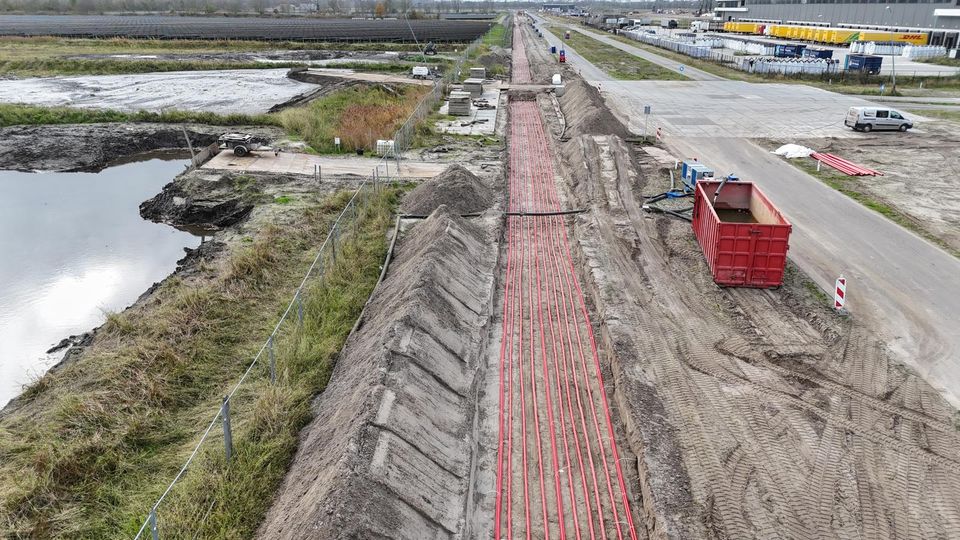
Lelystad Municipality is currently working on the layout of this area and preparations for the establishment of several large companies, such as JYSK, BESTSELLER and sphere. Not only in the construction of the distribution centres, but also in the design of the public area, circularity is central. The municipality has taken the initiative to preserve as much released soil as possible within the project area and to produce building materials itself wherever possible. For instance, the usable concrete remains of the former fish farm are now being reused as foundation material. This saves twice transport costs with ditto emissions.
"Good cooperation is necessary to reuse raw materials as sustainably as possible. "
Traditionally, land that is no longer useful for the project being worked on is disposed of and often sold to third parties. This process is time-consuming, costly and has a major environmental impact due to CO2 emissions from transportation and the waste of valuable raw materials. Instead of simply disposing of soil, Lelystad municipality now keeps control of soil flows and cooperates with other parties to reuse soil as sustainably as possible. In this way, not only is the amount of primary raw materials used reduced, but the value of the soil is retained as much as possible within the area.
Raw materials passport and data exchange
One of the most important tools in the process of circularisation is the raw materials passport. This passport provides insight into the composition of the land released during redevelopment. It contains valuable information such as:
- Which land can be directly reused, as close as possible to its place of origin?
- What still needs to be treated to make it suitable for reuse?
- What needs to be disposed of elsewhere, preferably within the municipality or another government?
By recording this information, the municipality can optimally manage land flows.
In addition, data exchange is a crucial part of its success. By giving all parties involved insight into the available and required soil flows, smart choices can be made to minimise transport costs and CO2 emissions. Lelystad municipality shares data with the Buyer Group Grondstromen. Here, public clients such as Rijkswaterstaat, municipalities, provinces and water boards work together to optimise soil flows at regional level. The aim is to better match soil supply and demand.
"If we have a better understanding of land flows, we can also make better choices. "
Therefore, data exchange is important.
Pilot project soil restoration in Flevokust Port
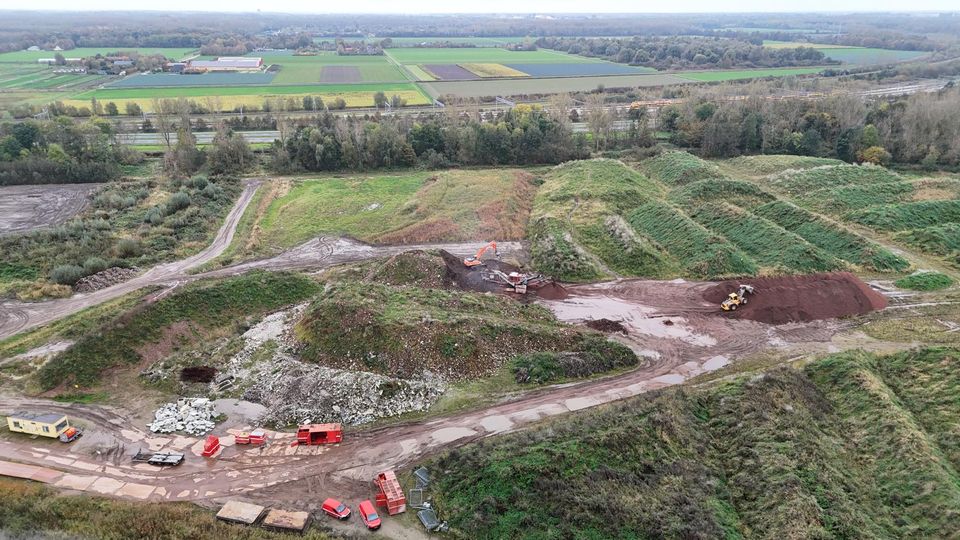
An innovative part of the layout of Flevokust Haven is the vital soil restoration pilot. Through systems biology, a combination of released dredged material, compost and natural micro-organisms such as fungi and bacteria, it explores how to rapidly improve soil quality. The aim is to convert low-grade soil into high-grade application, which can then be used again in other projects. The results of this pilot will provide valuable insights for future projects focusing on circular soil use and sustainable soil restoration techniques.
This approach is in line with the national Water and Soil Stewardship Policy and plays an important role within the Ministry of Infrastructure and Water Management's Soil and Subsoil Programme.